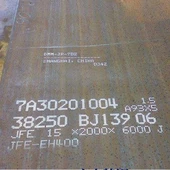
ASTM A588 grade A plate is high strength low alloy structural steel specification with improved atmospheric corrosion resistance. ASTM A588 grade A plate has a 50ksi minimum yield strength and a 70ksi minimum tensile strength. A242 plate is low alloy structural steel for structural members where weight savings and atmospheric corrosion resistance are important.
The ASTM A588 grade A plate is equivalent to Corten A steel plate. The A242 plate is equivalent to Corten B steel plate. Compared with common low alloy high strength steel such as A572 gr 50, the advantage of ASTM A588 grade A plate and A242 plate is their weathering ability.
Phosphorus (P) Content:
A242 (Corten A): Allows for higher phosphorus content (historically up to 0.15%, though modern versions are often lower). Phosphorus significantly boosts atmospheric corrosion resistance.
A588 (Corten B): Strictly limits phosphorus (typically max 0.03-0.04%). This improves weldability and fracture toughness, especially in thicker sections, at the expense of some corrosion resistance.
Tensile Strength:
A242 (Corten A): Specifies a minimum tensile strength of 63 ksi (435 MPa) for Grades 1 & 3, and 70 ksi (485 MPa) for Grade K (a newer, stronger variant).
A588 (Corten B): Specifies a minimum tensile strength of 70 ksi (485 MPa) for all grades. This is the most significant mechanical difference.
Yield Strength:
A242 (Corten A): Minimum yield strength of 50 ksi (345 MPa) for material thicknesses up to 0.75 inches (19 mm) in Grade 1/Grade 3, and higher for Grade K (65 ksi min).
A588 (Corten B): Minimum yield strength of 50 ksi (345 MPa) for all material thicknesses covered by the standard (up to 8 inches / 200mm for some grades). Note this applies to thinner sections; yield strength requirements decrease slightly for very thick sections per both standards.
Weldability & Toughness:
A588 (Corten B): Generally considered to have superior weldability and impact toughness (especially at lower temperatures and in thicker sections), primarily due to its lower phosphorus and carbon content.
A242 (Corten A): While weldable, its higher P content can make it slightly more sensitive in critical welding applications, particularly as thickness increases, requiring stricter adherence to qualified welding procedures.
Intended Application Focus:
A588 (Corten B): Developed for structural applications like bridges, buildings, and equipment requiring high strength-to-weight ratio, weldability, and toughness in thicker sections while maintaining good atmospheric corrosion resistance. Dominant choice for demanding structural projects.
A242 (Corten A): Developed initially to provide enhanced atmospheric corrosion resistance. Often used successfully in thinner sections for architectural applications like cladding, fascia, roofing, and sculpture. Grade K was added later to compete better with A588 on strength. More commonly associated with aesthetic and moderate structural use in Europe.
Ductility (Elongation):
A588 (Corten B): Slightly higher minimum elongation requirements (21% min in 8 inches / 20% in 2 inches) compared to traditional A242 grades.
A242 (Corten A): Minimum elongation for Grade 1/Grade 3 is 18% in 8 inches (15% in 2 inches). Grade K matches A588 at 21% in 8 inches.
Material Forms & Thickness Suitability:
A588 (Corten B): Optimized and commonly used for thicker structural sections (plates, shapes, bars up to 8 inches thick/200mm depending on grade).
A242 (Corten A): More commonly associated with thinner material forms like sheet, strip, and plates (especially Grade K).

In Simple Terms:
A588 (Corten B) is the go-to standard for demanding structural applications. Where high strength, good weldability, and toughness (especially in thicker sections and at lower temperatures) are paramount alongside corrosion resistance, use A588/ASTM A588/Corten B.
A242 (Corten A) is often chosen for architectural applications or moderate structural uses in thinner sections. Where maximum corrosion resistance in thin sections is a priority and the highest tensile strength requirements of A588 are not needed (especially for Grades 1/3), A242/ASTM A242/Corten A is suitable. Grade K of A242 bridges the strength gap for thinner sections.