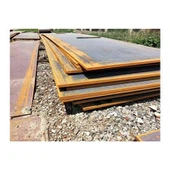
A516 GR 60 and A516 GR 70 are boiler/pressure vessel steel plates differing mainly in strength, with GR 70 having higher tensile and yield strength (ideal for high pressure) due to higher carbon/manganese content, while GR 60 offers better ductility and formability (better for moderate pressure/complex shapes) with lower strength, though both provide good low-temperature toughness.
Chemical Composition Comparison
|
Element |
ASTM A516 GR 70 (% by weight) |
ASTM A516 GR 60 (% by weight) |
|---|---|---|
|
Carbon (C) |
0.27 max |
0.21 max |
|
Manganese (Mn) |
0.85–1.20 |
0.60–1.20 |
|
Phosphorus (P) |
0.035 max |
0.035 max |
|
Sulfur (S) |
0.035 max |
0.035 max |
|
Silicon (Si) |
0.15–0.40 |
0.15–0.40 |
|
Aluminum (Al) |
0.02 min (for killed steel) |
0.02 min (for killed steel) |
|
Iron (Fe) |
Balance |
Balance |
Mechanical Properties Comparison
|
Property |
ASTM A516 GR 70 |
ASTM A516 GR 60 |
|---|---|---|
|
Tensile Strength |
485–620 MPa (70–90 ksi) |
415–550 MPa (60–80 ksi) |
|
Yield Strength (min) |
260 MPa (38 ksi) |
220 MPa (32 ksi) |
|
Elongation (min, 200 mm) |
17% |
21% |
|
Elongation (min, 50 mm) |
21% |
25% |
|
Hardness (HB, typical) |
140–200 HB |
120–165 HB |
|
Impact Toughness (Charpy V-notch) |
Meets ASTM requirements at -46°C |
Meets ASTM requirements at -51°C |
Key Differences
Strength: GR 70 is stronger (higher tensile/yield) than GR 60, making it suitable for high-pressure applications like petrochemical vessels, whereas GR 60 is for moderate-pressure uses.
Ductility/Formability: GR 60 is more ductile, making it easier to form and weld, beneficial for complex shapes in moderate conditions.
Chemical Composition: GR 70 generally has slightly higher carbon and manganese content, contributing to its higher strength.
Applications
ASTM A516 GR 70: Preferred for:
High-pressure vessels in oil, gas, and chemical processing.
Boilers in power generation requiring robust strength.
Cryogenic applications like LNG storage tanks.
ASTM A516 GR 60: Suited for:
Moderate-pressure vessels where cost and formability are priorities.
Boilers and tanks requiring high ductility for fabrication.
Low-temperature applications with less stringent strength requirements.
Weldability
Both grades are fully killed carbon steels with excellent weldability using standard processes (SMAW, GTAW, SAW). However:
ASTM A516 GR 70: Higher carbon content requires careful welding to avoid hardness issues, but normalization enhances weld quality.
ASTM A516 GR 60: Lower carbon content simplifies welding, reducing the risk of cracking.