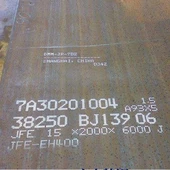

ABS FQ47 are specialized grades of marine steel plates designed for use in the construction of ships and other marine vessels. These steel grades possess excellent mechanical properties and chemical composition, making them suitable for a range of demanding applications in the marine industry.
In terms of chemical composition, ABS FQ47 are composed of carbon, silicon, manganese, phosphorus, sulfur, chromium, molybdenum, nickel, copper, and nitrogen. The precise balance of these elements ensures the desired mechanical properties and corrosion resistance of the steel.
|
ABS FQ47 Extra high Strength Chemical Composition in Tempering and Quenching |
||||||
|
Grade |
The Element Max (%) |
|||||
|
C |
Si |
Mn |
P |
S |
N |
|
|
ABS FQ47 |
0.18 |
0.55 |
1.60 |
0.025 |
0.025 |
0.02 |
The mechanical properties of these marine steel plates are noteworthy. They exhibit high yield strength and tensile strength, which are essential for withstanding the rigors of the marine environment. Additionally, their excellent toughness and ductility contribute to their ability to absorb impact and resist cracking.
|
ABS FQ47 Extra high strength property in tempering and quenching |
||||||
|
Grade |
Mechanical Property |
Charpy V Impact Test |
||||
|
Yield |
Tensile |
Elongation |
Degree |
Energy 1 |
Energy 2 |
|
|
Min Mpa |
Mpa |
Min % |
-40 |
J |
J |
|
|
ABS FQ47 |
460 |
570-720 |
17 |
31 |
46 |
|
|
Note: Energy 1 is transverse impact test, Energy 2 is longitudinal |
||||||
ABS FQ47 steel plates are typically supplied in a normalized or quenched and tempered condition. This heat treatment ensures the desired microstructure and mechanical properties of the steel. Normalized steel has a more uniform grain structure, improving its toughness and weldability. Quenched and tempered steel, on the other hand, exhibits higher strength and hardness, suitable for applications requiring greater resistance to wear and fatigue.
Impact testing is an important aspect of marine steel plate certification. ABS FQ47 steel plates undergo rigorous impact testing to ensure they meet the required standards for toughness at low temperatures. This ensures that the steel plates will perform reliably even in cold environments, where the risk of brittle fracture is increased.
The main applications for ABS FQ47 steel plates include the construction of hulls, decks, and other structural components of ships and marine vessels. These grades are particularly suitable for use in vessels operating in harsh environments, such as those exposed to corrosive seawater or extreme weather conditions.