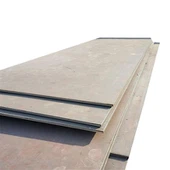

30CrMnSiA is a high quality alloy structural steel whose chemistry is built around chromium, manganese and silicon, with a nominal carbon content of about 0.30 %. The plate form is covered by GB/T 11251 for alloy structural steel plates, while the steel grade itself is defined in GB/T 3077 for alloy structural steel bars. The final letter A denotes the high quality class, in which sulfur and phosphorus are controlled to tighter limits than the ordinary quality grade.
In the Chinese designation, the leading number gives the approximate carbon content in hundredths of a percent, the following letters give the main alloying elements, and the final A marks the impurity control class. The grade is a through hardening alloy steel rather than a low alloy structural plate, so it is almost always used after heat treatment rather than in the as rolled condition.
Chemical Composition
The typical analysis balances hardenability against toughness. Silicon raises the tempering resistance, chromium improves hardenability and wear resistance, and manganese contributes solid solution strengthening.
| Element | Typical range, % |
|---|---|
| Carbon | 0.28 to 0.35 |
| Silicon | 0.90 to 1.20 |
| Manganese | 0.80 to 1.10 |
| Chromium | 0.80 to 1.10 |
| Sulfur and phosphorus | Low residual limits |
Mechanical Properties After Heat Treatment
Properties are quoted for the quenched and tempered condition and depend on the ruling section and the tempering temperature. For oil quenched and tempered plate the tensile strength is typically 1080 MPa or higher with a yield strength above 835 MPa and elongation of at least 10 %, while a softer tempering treatment is used where machining or welding follows. Hardness and impact requirements are agreed with the customer rather than fixed by a single value, because the same grade can be supplied across a wide strength band.
The description sometimes found on supplier pages of a bolt property class applies to fasteners, not to plate, and cannot be used to specify a loaded structural component. Properties must be quoted as measured mechanical values from the relevant standard and the agreed heat treatment.
Heat Treatment and Processing
The grade is normally austenitised, oil quenched and tempered to the required strength level. Because the alloy content is high, the cooling rate matters more than in plain carbon plate: sections with a large ruling thickness may need a more severe quench or a different grade to achieve full hardening through the section. Machining is best carried out on over-aged, softer material and finished after the final heat treatment. Welding is difficult in the fully hardened condition and generally requires preheat, controlled heat input and immediate post weld heat treatment; welded joints rarely reach parent metal strength without careful procedure development.
Quality Control and Supply Form
Plates are supplied with chemical analysis, tensile and hardness results and, when specified, impact testing. Ultrasonic inspection can be ordered for plate intended for dynamically loaded parts. Cut edges are usually dressed to remove the hardened layer produced by thermal cutting, and delivery condition, heat treatment state and hardness range should all be stated on the purchase order because a change in any one of them changes the usable design strength.
Applications
Typical uses include high load transmission parts, gearbox and clutch components, shafts and rotors, connecting elements for machinery, high pressure vessel and pump parts, and structural components in transport and defence equipment. It is also used for fabricated jigs and fixtures where fatigue resistance over many load cycles is the limiting design condition.
Frequently Asked Questions
Q: Which standard covers 30CrMnSiA plate?
A: The grade is defined in GB/T 3077 for alloy structural steel bars, and plate is covered by GB/T 11251 for alloy structural steel plates. The purchase order should state which product form and which standard edition is required.
Q: What does the A suffix mean?
A: It marks the high quality class, in which sulfur and phosphorus are held to tighter limits than in the ordinary quality grade of the same base chemistry.
Q: What is the typical tensile strength?
A: In the quenched and tempered condition the tensile strength is commonly 1080 MPa or higher, but the exact value depends on the ruling section and the tempering temperature agreed with the customer.
Q: Is 30CrMnSiA easy to weld?
A: No. Its carbon and alloy content give it high hardenability, so welding needs preheat, controlled heat input and post weld heat treatment to avoid cracking, and the joint strength is usually lower than that of the parent plate.
Q: How is the plate delivered?
A: It is normally supplied heat treated to an agreed hardness or strength range, with mill certificates covering chemical composition, tensile properties and hardness, plus ultrasonic testing if the application requires it.