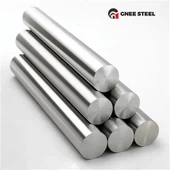

LR AH50 is an extra-high-strength marine steel plate certified by Lloyd's Register (LR). It has a minimum yield strength of 500 MPa and tensile strength ranging from 610 to 770 MPa, with a minimum elongation of 18% . Impact toughness is tested at -50°C, requiring minimum 41J . The chemical composition is strictly controlled with carbon ≤0.21% and manganese ≤2.5%, along with microalloying elements . This grade is typically supplied in normalized or TMCP conditions and is used for large vessels, offshore drilling platforms, and critical structural components .
LR AH69 is an ultra-high-strength marine steel plate also certified by Lloyd's Register (LR), designed for the most demanding structural applications . It has a minimum yield strength of 690 MPa and tensile strength ranging from 770 to 940 MPa, with a minimum elongation of 16-18% . The chemical composition features carbon ≤0.21%, manganese ≤1.70%, and alloying elements such as Ni, Cr, Mo, V, and Ti to achieve superior mechanical properties . Impact toughness is tested at -60°C, requiring minimum 46J (transverse) and 69J (longitudinal) . This grade is delivered in normalized, quenched and tempered (QT), or TMCP conditions and is used for the most critical applications including hull structures, offshore platforms, and marine engineering projects requiring maximum strength-to-weight ratio .
Both LR AH50 and LR AH69 are LR-certified high-strength marine steels designed for shipbuilding and offshore applications. Their primary differences lie in strength level and low-temperature performance: AH50 offers a minimum yield strength of 500 MPa with impact testing at -50°C, suitable for extra-high-strength hull construction, while AH69 provides a substantially higher minimum yield strength of 690 MPa with superior low-temperature toughness tested at -60°C, designed for the most demanding load-bearing applications requiring maximum strength-to-weight ratio in extreme environments. Both grades feature strictly controlled chemical composition and maintain good weldability for critical marine service. The selection between them depends on whether the project requires the balanced strength of AH50 or the superior performance of AH69 for more extreme structural demands.
Chemical Composition
|
LR AH50 extra high Strength Chemical Composition |
|||||||
|
Grade |
The Element Max (%) |
||||||
|
C |
Si |
Mn |
P |
S |
Al |
N |
|
|
LR AH50 |
0.21 |
0.55 |
1.70 |
0.035 |
0.035 |
0.015 |
0.020 |
|
Nb |
V |
Ti |
Cu |
Cr |
Ni |
Mo |
|
|
0.02-0.05 |
0.03-0.10 |
0.02 |
|
|
|
|
|
|
LR AH69 extra high Strength Chemical Composition |
|||||||
|
Grade |
The Element Max (%) |
||||||
|
C |
Si |
Mn |
P |
S |
Al |
N |
|
|
LR AH69 |
0.21 |
0.55 |
1.70 |
0.035 |
0.035 |
0.015 |
0.020 |
|
Nb |
V |
Ti |
Cu |
Cr |
Ni |
Mo |
|
|
0.02-0.05 |
0.03-0.10 |
0.02 |
|
|
|
|
|
Mechanical Property
|
LR AH50 extra high strength property |
|||||||
|
Grade |
|
Mechanical Property |
Charpy V Impact Test |
||||
|
Thickness |
Yield |
Tensile |
Elongation |
Degree |
Energy 1 |
Energy 2 |
|
|
LR AH50 |
mm |
Min Mpa |
Mpa |
Min % |
0 |
J |
J |
|
t≤50 |
500 |
610-770 |
18% |
33 |
50 |
||
|
50<t≤70 |
500 |
610-770 |
18% |
33 |
50 |
||
|
70<t≤100 |
500 |
610-770 |
18% |
33 |
50 |
||
|
Note: Energy 1 is transverse impact test, Energy 2 is longitudinal |
|||||||
|
LR AH69 extra high strength property |
|||||||
|
Grade |
|
Mechanical Property |
Charpy V Impact Test |
||||
|
Thickness |
Yield |
Tensile |
Elongation |
Degree |
Energy 1 |
Energy 2 |
|
|
LR AH69 |
mm |
Min Mpa |
Mpa |
Min % |
0 |
J |
J |
|
t≤50 |
690 |
770-940 |
16% |
46 |
69 |
||
|
50<t≤70 |
690 |
770-940 |
16% |
46 |
69 |
||
|
70<t≤100 |
690 |
770-940 |
16% |
46 |
69 |
||
|
Note: Energy 1 is transverse impact test, Energy 2 is longitudinal |
|||||||