



ASME SA387 Grade 22 Class 2 Pressure Vessel Steel Plate Introduction
ASME SA387 Grade 22 Class 2 is a high-performance chromium-molybdenum alloy steel designed for pressure vessels and boilers operating at elevated temperatures. With a nominal composition of 2.25% Chromium and 1.00% Molybdenum, this material offers exceptional resistance to creep and hydrogen attack.
Unlike Class 1, Class 2 material undergoes mandatory normalizing and tempering to achieve higher strength levels, making it the preferred choice for critical components in hydrocracking units and gas processors.

Key Takeaways
- Thermal Treatment: Mandatory Normalizing and Tempering (N+T) is required to ensure mechanical stability.
- High Strength: Minimum yield strength of 310 MPa (45 ksi) and tensile strength up to 690 MPa.
- Hydrogen Resistance: Superior performance in high-pressure hydrogen service per API and NACE standards.
- Operating Window: Reliable service in temperatures ranging from 450°C to 600°C.
Why Choose ASME SA387 Grade 22 Class 2?
Controlled Mandatory Heat Treatment
Unlike Class 1, which permits annealed delivery, our ASME SA387 Grade 22 Class 2 mandatorily undergoes normalizing and tempering (N&T) to ensure a homogeneous grain structure and minimize property variations.
Enhanced Strength Margin
The higher yield and tensile strengths of ASME SA387 Grade 22 Class 2 provide a safety reserve to withstand thermal cycling, pressure fluctuations, and creep deformation at elevated temperatures.
Excellent Overall Elevated-Temperature Performance
Demonstrating exceptional creep-rupture strength, oxidation resistance, and resistance to hydrogen damage, ASME SA387 Grade 22 Class 2 is suitable for continuous service at temperatures up to 600°C.
Strict Internal Quality Control
The average inclusion rating of ASME SA387 Grade 22 Class 2 is controlled at ≤ 2.0; sulfur and phosphorus impurities are strictlylimited to below 0.025% (more stringent than the standard maximum limit of 0.035%), reducing the risk of high-temperature embrittlement.
Compliance with International Codes
ASME SA387 Grade 22 Class 2 is fully approved for use in ASME U-stamp, PED, NACE MR0175, and API hydrogen service projects, facilitating seamless acceptance during third-party owner inspections.
Proven Welding Compatibility
Well-established Welding Procedure Specifications (WPS) for ASME SA387 Grade 22 Class 2 are thoroughly developed for fabricators, preventing premature joint failure during elevated-temperature operations.
Technical Specifications for ASME SA387 Grade 22 Class 2
| Item | Details |
|---|---|
| Applicable Standard | ASME SA387 / SA387M, ASTM A20, ASTM A370 |
| Material Grade | ASME SA387 Grade 22 Class 2 (UNS K21590, 2.25Cr‑1Mo) |
| Product Form | Hot‑Rolled Pressure Vessel Steel Plate |
| Thickness Range | 5 mm – 150 mm, customizable upon request |
| Width Range | 1000 mm – 4500 mm, customizable upon request |
| Length Range | 3000 mm – 18000 mm, custom cut‑to‑length available |
| Dimensional Tolerance |
Complies with ASME A6/A6M; conventional thickness tolerance: -0.3 mm ~ +0.8 mm |
Chemical Composition (Heat Analysis)
The 2.25Cr-1Mo alloy system is strictly controlled to minimize impurities like Phosphorus and Sulfur, reducing the risk of temper embrittlement. Standard references to ASME SA-387 define the following limits:
| Element | ASME SA387 Grade 22 Requirement (%) |
|---|---|
| Carbon (C) | 0.05 – 0.15 |
| Manganese (Mn) | 0.30 – 0.60 |
| Silicon (Si) | 0.50 max |
| Phosphorus (P) | 0.035 max |
| Sulfur (S) | 0.035 max |
| Chromium (Cr) | 2.00 – 2.50 |
| Molybdenum (Mo) | 0.90 – 1.10 |
Mechanical Properties
The Grade 22 Class 2 designation requires significantly higher strength compared to Class 1, achieved through specialized heat treatment.
| Property | Minimum Requirement |
|---|---|
| Tensile Strength | 515 – 690 MPa (75 – 100 ksi) |
| Yield Strength (0.2% Offset) | 310 MPa (45 ksi) min |
| Elongation (in 50mm) | 18% min |
| Reduction of Area | 40% min |
ASME SA387 Grade 22 Class 2 Key Property---High-Temperature Performance
High‑Temperature Creep Resistance
Creep deformation is the dominant failure mode for pressure components operating under sustained high temperature and pressure. Thanks to its 2.25Cr‑1Mo alloy design coupled with controlled N+T microstructure, SA387 Gr.22 Class 2 maintains excellent creep rupture strength within the 450°C – 600°C operating window.
High‑Temperature Oxidation & Sulphidation Resistance
Chromium forms a dense protective oxide film on the steel surface under high temperatures. The plate resists scaling, section thinning and sulphidation corrosion when exposed to high‑temperature flue gas and sour hydrocarbon media. Under 550 ℃ dry air environment, uniform oxidation corrosion rate ≤0.12 mm/year under 1000h continuous exposure, extending overhaul intervals for refining facilities.
Resistance to High‑Temperature Hydrogen Attack
In hydrogen‑rich service such as hydrocracking units, hydrogen ingress causes steel decarburisation and internal microcracks. The homogeneous tempered microstructure of Gr.22 Class 2 inhibits hydrogen embrittlement, HIC and SSCC. Typical batch HIC test result: Full HIC test per NACE TM0284 Solution A, Crack Sensitivity Ratio (CSR)=0, fully compliant with NACE MR0175 sour hydrogen service requirements. The material complies with NACE MR0175 standards and is widely adopted for API hydrogen processing facilities.
Thermal Cycle Adaptability
Frequent unit startup and shutdown induce severe alternating thermal stress. The consistent microstructure obtained via mandatory normalising and tempering improves thermal fatigue resistance, lowering the risk of crack initiation under repeated temperature cycling between ambient temperature and maximum design temperature.
ASME SA387 Grade 22 Class 2 Steel Plate Heat Treatment and Manufacturing Requirements
To reach the Class 2 property threshold, plates must be normalized by heating to 900°C–950°C followed by air cooling. This is followed by tempering at a minimum of 675°C (1250°F) to stabilize the microstructure and relieve internal stresses. For thick plates, accelerated cooling (liquid quenching) may be applied if requested by the purchaser to ensure uniform properties throughout the cross-section.
Welding and Post-Weld Heat Treatment (PWHT)
Welding ASME SA387 Grade 22 Class 2 requires specific procedures to prevent cracking in the heat-affected zone (HAZ). Preheating between 200°C and 250°C is standard practice. After welding, Post-Weld Heat Treatment (PWHT) is mandatory, typically between 675°C and 725°C, to restore ductility and ensure the welded joints match the high-temperature performance of the base metal. These requirements comply with ASME Boiler and Pressure Vessel Code Section VIII.
ASME SA387 Grade 22 Class 2 PVQ Plate Typical Application
ASME SA387 Grade 22 Class 2 is utilized in heavy industries where safety and durability under thermal stress are paramount.
- Oil and Gas Refining: Hydrocracking reactors, desulfurization units, and high-pressure separators.
- Power Generation: Steam drums, headers, and boiler pressure components in thermal power plants.
- Chemical Processing: Ammonia synthesis converters and coal gasification vessels.
- Hydrogen Service: Components complying with NACE MR0175 and API 941 for sour gas and high-pressure hydrogen environments.


Why Choose GNEE Steel?
Inspection & Quality Assurance
A full suite of testing procedures is implemented to guarantee compliance with ASME SA387 standards and client technical requirements:
Routine tests: Optical emission spectroscopy, tensile test, Charpy impact test, hardness test, ultrasonic testing in accordance with ASME SA578.
Material certification: EN 10204 3.1 or 3.2 Mill Test Certificates (MTC), PED documentation, NACE certification available upon request. All test records are traceable via heat number & individual plate serial number.

Manufacturing & Supply Capabilities
GNEE Steel maintains stock of SA387 Grade 22 Class 2 alloy steel plates in standard thickness ranges. We cooperate with qualified domestic mills to produce custom thick plates up to 300 mm.
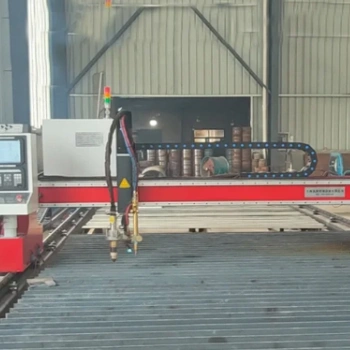
Available services: Flame/plasma cutting, shot blasting, surface grinding, dimensional customisation. We support small trial orders and large bulk project orders, serving EPC contractors, pressure vessel fabricators and international steel traders globally.
Stable monthly supply capacity: 800–1500 tons of SA387 series chromium‑molybdenum plates, flexible lead times of 10–30 days subject to thickness.


Packaging, Delivery & Export Services
Packaging: Waterproof paper, anti‑rust film, steel strapping, secured on wooden pallets for sea transportation to avoid deformation and seawater corrosion. Permanent marking includes grade, thickness, heat number, standard and dimensions. Package damage rate remains less than 0.5% during long ocean transit.
Logistics: Flexible sea freight delivery to major ports worldwide. We provide full customs documentation support including commercial invoice, packing list and certificate of origin.
One‑stop export support: Pre‑shipment review of technical documentation to meet third‑party inspection requirements.

If you are sourcing ASME SA387 Grade 22 Class 2 hot‑rolled pressure vessel steel plates for refining, power or hydrogen facility projects, please send your detailed inquiry including required thickness, dimensions, quantity, testing requirements (UT level, impact test, HIC, MTC type) and destination port.
Our technical sales team will provide competitive quotations, complete material documentation support and professional material selection consultation. Contact GNEE Steel today to receive your formal offer.
FAQ
Q: Can SA387 Gr.22 Class 1 replace Class 2?
A: No, SA387 Grade 22 Class 1 cannot directly replace Class 2 in design because Class 2 has higher mechanical strength limits than Class 1.
Q: What is the difference between SA387 Gr.22 and 12Cr2Mo1R?
A: There is no functional difference between SA387 Gr.22 and 12Cr2Mo1R because they designate the exact same chromium-molybdenum pressure vessel steel, with ASME SA387 Gr.22 being the American standard and 12Cr2Mo1R being its direct Chinese (GB) national standard equivalent.
Q: Is PWHT compulsory after welding SA387 Gr.22 Class 2 plate?
A: Yes, post-weld heat treatment (PWHT) is generally mandatory after welding SA387 Gr. 22 Class 2 plate under major construction codes like ASME Boiler and Pressure Vessel Code Section VIII, though strict exemptions can occasionally apply based on nominal thickness and specific service rules.
Q: What is the price of SA 387 GR 22?
A: The price of ASME SA 387 Grade 22 alloy steel plate generally ranges from $690 to $800 per ton wholesale, depending on market conditions, class, and supplier.
Q: Can SA387 Grade 22 Class 2 plates be used in the as-rolled (hot-rolled) condition?
A: No. The Class 2 designation requires specific mechanical properties that can only be achieved through normalizing and tempering. As-rolled plates generally only meet the lower strength requirements of Class 1 or fail to meet the standard entirely.
Q: How does SA387 Grade 22 compare to Chinese standards?
A: ASME SA387 Grade 22 is technically equivalent to the 12Cr2Mo1R grade specified in GB/T 35012 for hydrogen service steel plates. Both standards cover 2.25Cr-1Mo alloy steel for high-temperature pressure vessel applications.
Q: Is impact testing mandatory for Grade 22 Class 2?
A: Charpy V-Notch impact testing is often performed at -20°C or 0°C to verify low-temperature toughness, although the specific requirements depend on the design code and the thickness of the plate.


