



As a professional steel supplier with years of experience, GNEE Steel is committed to providing high-quality alloy steel plates for global customers. Alloy steel plates are essential materials in advanced manufacturing, aerospace, energy, and other high-end industries, thanks to their superior mechanical properties and customized performance. This article will comprehensively introduce what alloy steel plates are, their main types, core advantages, typical applications, and answer common questions to help you better understand and select products.
What Is an Alloy Steel Plate?
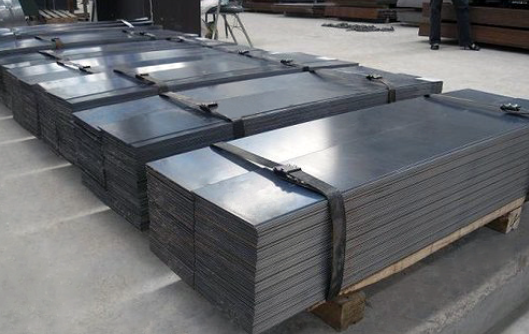
Alloy steel plate refers to a type of steel plate made by adding one or more alloying elements (such as nickel, tantalum, molybdenum, zirconium, niobium, tungsten, etc.) to carbon steel. The addition of these alloying elements is not random; it is precisely adjusted according to specific performance requirements to optimize the steel's strength, toughness, wear resistance, corrosion resistance, high-temperature resistance, and other key properties. Unlike ordinary carbon steel plates, alloy steel plates can be tailored to meet the harsh working conditions of different industries, making them irreplaceable in high-demand scenarios.
GNEE Steel's alloy steel plates are produced in strict accordance with international standards (such as ASTM, EN, GB) and undergo rigorous quality control, including chemical composition analysis, mechanical property testing, and non-destructive testing, to ensure that each batch of products meets customer requirements.
Main Types of Alloy Steel Supplied by GNEE Steel
GNEE Steel offers a complete range of alloy steel plates, covering various high-performance alloy systems.
The key types include the following:

1. Nickel Alloys
Nickel alloys are widely used due to their excellent corrosion resistance, high-temperature strength, and good ductility. Common grades include Inconel, Incoloy, Monel, etc. Nickel alloy plates from GNEE Steel have stable chemical properties and can withstand harsh environments such as high temperature, high pressure, and strong corrosion. They are core materials in the chemical, aerospace, and marine industries.
2. Tantalum Alloy
Tantalum alloy plates have outstanding corrosion resistance (resistant to almost all organic and inorganic acids except hydrofluoric acid) and high melting point (up to 2996°C). They also have good biocompatibility. GNEE Steel's tantalum alloy plates are mainly used in high-precision fields such as aerospace engine components, chemical corrosion-resistant equipment, and medical devices (such as implant materials).

3. Molybdenum Alloy
Molybdenum alloy plates are known for their high-temperature strength, good thermal conductivity, and low thermal expansion coefficient. They can maintain stable performance at temperatures above 1000°C. GNEE Steel supplies molybdenum alloy plates suitable for high-temperature furnace components, aerospace structural parts, and electronic device heat sinks, providing reliable material support for high-temperature working scenarios.
4. Zirconium Alloy
Zirconium alloy plates have excellent corrosion resistance (especially in high-temperature water and steam environments) and good mechanical properties. They also have low neutron absorption cross-section, making them an important material for nuclear energy. GNEE Steel's zirconium alloy plates are widely used in nuclear reactor components, chemical corrosion-resistant equipment, and marine engineering.

5. Niobium Alloy
Niobium alloy plates have high strength, good ductility, and excellent high-temperature stability. Adding niobium to steel can significantly improve the steel's strength and toughness without reducing its weldability. GNEE Steel's niobium alloy plates are used in aerospace, automotive manufacturing (high-strength components), and bridge construction, helping to reduce product weight and improve service life.
6. Tungsten Alloy
Tungsten alloy plates have the characteristics of high density (up to 18.5g/cm³), high melting point (3410°C), and excellent wear resistance. They are typical high-density and high-strength materials. GNEE Steel's tungsten alloy plates are mainly used in aerospace (balance weights, engine components), military (armor materials, projectile cores), and industrial fields (wear-resistant parts, high-temperature molds).
Core Advantages of GNEE Steel's Alloy Steel Plates
GNEE Steel's alloy steel plates stand out in the market due to their strict production control and product performance advantages. The key advantages are as follows:
Customizable Performance
According to customer needs, we can precisely adjust the content of alloying elements (such as nickel, molybdenum, niobium, etc.) to produce alloy steel plates with targeted properties (such as high-temperature resistance, corrosion resistance, high strength). Whether it is for low-temperature environments or high-pressure corrosion scenarios, we can provide customized solutions.
Superior Mechanical Properties
Compared with ordinary carbon steel plates, our alloy steel plates have higher yield strength, tensile strength, and toughness. For example, nickel alloy plates have a tensile strength of more than 600MPa, and tungsten alloy plates have excellent wear resistance, which can significantly improve the service life of equipment and reduce maintenance costs.
Excellent Environmental Adaptability
Our alloy steel plates can adapt to various harsh working environments, including high temperature (up to 1200°C for molybdenum alloy plates), low temperature (down to -196°C for nickel alloy plates), strong corrosion (tantalum alloy plates resistant to various acids), and radiation (zirconium alloy plates for nuclear energy). They maintain stable performance in extreme conditions
Strict Quality Assurance
GNEE Steel has established a complete quality management system, from raw material procurement to finished product delivery. Each batch of alloy steel plates undergoes strict chemical composition analysis (using spectral analysis), mechanical property testing (tensile test, impact test), and non-destructive testing (ultrasonic testing, magnetic particle testing) to ensure that the products meet international standards and customer requirements. We also provide complete quality certification documents (such as MTC).
Complete Specifications & Fast Delivery
We have a large inventory of alloy steel plates with thickness ranging from 2mm to 200mm, width from 1220mm to 4200mm, and length customizable according to customer needs. For urgent orders, we can adjust the production plan to ensure fast delivery and meet the customer's project progress requirements.
Typical Applications of Alloy Steel Plates
Due to their superior performance, GNEE Steel's alloy steel plates are widely used in various high-end industries, covering aerospace, energy, chemical, medical, military, and other fields. The specific applications are as follows:
1. Aerospace Industry
Nickel alloy plates, molybdenum alloy plates, and tungsten alloy plates are used in aircraft engine components (combustion chambers, turbine blades), aerospace structural parts (aircraft fuselage frames, satellite brackets), and balance weights. They can withstand high temperature, high pressure, and strong impact during flight, ensuring the safety and reliability of aerospace equipment.
2. Energy Industry
In the nuclear energy field, zirconium alloy plates are used in nuclear reactor fuel cladding tubes and pressure vessels; in the thermal power and petrochemical fields, nickel alloy plates and molybdenum alloy plates are used in boiler superheaters, heat exchangers, and hydrogenation reactors, resisting high-temperature and high-pressure corrosion; in the new energy field (such as wind power, solar energy), niobium alloy plates are used in high-strength structural parts, improving the stability and service life of equipment.
3. Chemical Industry
Tantalum alloy plates, nickel alloy plates, and zirconium alloy plates are used in chemical reaction vessels, corrosion-resistant pipelines, and storage tanks, resisting the corrosion of strong acids (such as sulfuric acid, hydrochloric acid), strong alkalis, and organic solvents. They are essential materials for ensuring the safe operation of chemical equipment and reducing leakage risks.
4. Medical Industry
Tantalum alloy plates and zirconium alloy plates have good biocompatibility (no rejection reaction with human tissues) and corrosion resistance, and are used in medical implant materials (such as artificial joints, bone fixation plates) and medical equipment components (such as surgical instruments, diagnostic equipment parts), ensuring the safety and effectiveness of medical treatment.
5. Military Industry
Tungsten alloy plates are used in armor materials (tank armor, bulletproof vests) and projectile cores due to their high density and high strength; nickel alloy plates and niobium alloy plates are used in military aircraft, warship structural parts, and missile components, withstanding harsh environments such as high speed and strong impact.
6. Automotive & Machinery Manufacturing
Niobium alloy plates and nickel alloy plates are used in high-strength automotive components (such as chassis frames, engine connecting rods) and mechanical equipment wear-resistant parts (such as crusher liners, extruder screws), improving the strength and wear resistance of products and reducing energy consumption.
If you want to learn more about GNEE's products, you can send an email to alloy@gneesteelgroup.com. We are more than happy to assist you.
FAQ
Below are the most common questions about alloy steel plates. If you have other questions, please contact our technical team for detailed answers.
Q1: What factors should I consider when selecting alloy steel plates?
A1: The key factors include: ① Working environment (temperature, pressure, corrosive medium, etc.); ② Mechanical property requirements (yield strength, tensile strength, toughness, etc.); ③ Application scenario (aerospace, chemical, medical, etc.); ④ Budget and cost control. Our technical team can provide professional selection suggestions according to your specific needs.
Q2: Do you provide customized alloy steel plates?
A2: Yes. GNEE Steel has rich experience in customized production. We can adjust the alloy composition, thickness, width, length, and surface treatment (such as pickling, polishing) according to customer requirements to produce alloy steel plates that meet specific performance and application needs. Please provide detailed technical parameters when consulting.
Q3: What certifications do your alloy steel plates have?
A3: Our alloy steel plates have passed various international certifications, including ASTM (US), EN (EU), GB (China), JIS (Japan), etc. We can also provide certification documents required by customers, such as Material Test Certificate (MTC), ISO 9001 quality management system certification, and classification society certification (such as CCS, ABS, DNV) for marine and aerospace applications.
Q4: How to store alloy steel plates correctly?
A4: To avoid corrosion and damage, alloy steel plates should be stored in a dry, ventilated, and rainproof warehouse; they should be placed on wooden pallets to avoid direct contact with the ground (preventing moisture and rust); different types and grades of alloy steel plates should be stored separately and labeled clearly to avoid confusion; for tantalum alloy, zirconium alloy, and other precious alloy plates, they should be stored in a clean environment to avoid contamination.
Q5: What is the delivery time of alloy steel plates?
A5: For stock products, the delivery time is usually 3-7 working days; for customized products, the delivery time depends on the production difficulty and order quantity, generally 15-45 working days. We will confirm the specific delivery time with you when signing the contract and try our best to meet your project progress requirements.
Q6: How to distinguish the quality of alloy steel plates?
A6: The quality can be judged from the following aspects: ① Check the quality certification documents (MTC) to confirm whether the chemical composition and mechanical properties meet the standards; ② Observe the surface quality (no cracks, scratches, rust, or other defects); ③ Measure the dimensions (thickness, width, length) to ensure they meet the requirements; ④ For key applications, third-party testing can be commissioned. It is recommended to choose regular suppliers like GNEE Steel to ensure product quality.
If you want to learn more about GNEE's products, you can send an email to alloy@gneesteelgroup.com. We are more than happy to assist you.
Relying on many first-class equipment, such as CNC Shearing machine, Press Brake machine, Straightening machine, Roll Bending machine, Flat Bar Machine, Deburring machine etc, GNEE STEEL could provide various semi-productsand extensive forming services to customers.
GNEE STEEL PROCESSING


1.CTL & SL SERVICE (141 SETS)
Currently, GNEE STEEL has imported manyadvanced CTL/SL equipment from Italy and Korea and could provide customized CTL/SL services from cold rolled stainless steel and carbon steel to hot rolled stainless steel and carbon steel as well as strips and ultra-wide sheet.
CTL FACILITIES
Max Length:16500mm
Max Width:2200mm
Max Thickness:25.4mm
Max Yield Strength:1500Mpa
SL FACILITIES
Max Width:2200mm
Max Thickness:18mm
Max slit Quantity:31
Max Yield Strength:1200Mpa


2.CUTTING SERVICE
GNEE STEEL imported lots of advanced cutting machines from Germany, Sweden, America and Japan, including plasmas cutting machine, water jet cutting machine, laser cutting machine, flame cutting machine and saw machine. In order to meet customers' diversified needs, GNEE STEEL also adopts nest working multi-cutting methods and intensive production to improve production capacity and save costs for the customers.
Laser Cutting Machine
Max Cutting Length:40,000mm
Max Width:4,600mm
Max Thickness:100mm
Flame Cutting Machine
Max Cutting Length:40,000mm
Max Width:8,000mm
Max Thickness:500mm

Plasmas Cutting Machine
Max Cutting Length:30,000mm
Max Width:5,000mm
Max Thickness:100mm
Water-jet Cutting
Max Cutting Length:12,000mm
Max Width:4,010mm
Max Thickness:250mm

3.FORMING SERVICE
Steel Plate Roll Bending
Maximum Rolling Thickness: up to 200mm
Maximum Width: 4200mm


Automatic Bending Machine-Press Brake
Max Bending Capability:3000Ton
Max Bending Length:15,000mm
Expert in Bending High-Strength & Wear-Resistant Steels


Punching Machine
Max Width:3,070mm
Max Thickness:8mm
Max Pressure:250t

BEVELING SERVICE
GNEE STEEL beveling platform has edge milling machine, edge planer, flame / plasma groove cutting machine, flame groove cutting robot, desktop chamfering machine, gantry planerand other advanced equipment to provide customers with parts prefabrication services,daily processing of V-type, Y-type, X-type and U-type grooves, and guarantee subsequent processes such as welding and assembly of products.
Milling:
Max Cutting Length:18,000mm
Max Width:4500mm
Max Thickness:120mm


Beveling:
Max Length:16,000mm
Max Thickness:80mm


MACHINING SERVICE
GNEE STEEL owns CNC Portal-type Boring and Milling machine,CNC Floor-type Boring and Milling machine, Vertical Precision 5-axis Milling Machine, Portal-type Planer, Vertical Lathe, Cylindical Grinding machine, Hydraulic Planer and CNC Lathe and could provide fine machining of large spare parts and structural parts for customers.
Gantry Type Boring & Milling Maching Center
Max Length:48000mm
Max Width:12500mm
Max Height:8000mm
Max Diameter:10500mm

Deep-hole Drilling Equipment
Max Driling Depth:1,100mm
Max Bore Diameter:φ80mm
Max Diametar:φ4,500mm

MMulti-hole Drilling Equipment
Max Length:13,000mm
Max Width:10,000mm
Max Bore Diameter:φ105mm
Max Drilling Depth:250mm

Floor Boring And Milling Machine
Max Length:24,000mm
Max Height:8,000mm
Turntable Dimensions:9x5m

Vertical Lathe
Max Height:6,000mm
Max Diametar:φ22,00mm

Automated Edge Milling Machine
The Automated Edge Milling Machine is a leading product in heavy-duty milling equipment. It is primarily used for weld groove preparation (beveling) on large-format plates made of stainless steel, carbon steel, and special steel grades. It can process plates with a maximum thickness of up to 90mm, a length of 16 meters, and a width of 4 meters.
It is equipped with dual milling units and a fully automatic milling cutter head changing system, enabling automated 4-edge beveling. Its standout feature is the profiling technology used when milling wavy plates and irregularly shaped products, which ensures absolute consistency of the groove after milling.
Utilizing specially designed milling cutter heads, it can execute highly difficult and complex groove profiles in a single pass.
Materials: Plain carbon steel, pressure vessel steel, wear-resistant steel, high-strength steel, stainless steel, nickel-based alloys, etc.
Width: 1200 - 4200 mm
Length: 5800 - 16000 mm
Thickness: 5 - 90 mm
Weight: Up to 35 tons
This edge milling machine is the world's premier automated bevel milling equipment. With its excellent structural design and advanced data algorithms, it achieves full automation from plate detection to the actual milling process, significantly improving processing efficiency while guaranteeing high precision.
- Processing Accuracy
Length accuracy: ±1mm when L < 10m; ±2mm when L > 10m;
Width accuracy: ±1mm;
Diagonal accuracy: ±2mm;
Root face accuracy (blunt edge): ±1mm for Y-grooves; +0.5mm for X-grooves.
- Processing Efficiency
The processing efficiency is more than 10 times that of conventional edge milling or edge planing equipment.
HEAT TREATMENT
Heat Treatment Furnace
Max Furnace Size:36x12x13.5m
Max Rated Temperature:1100℃
Max Loading Capacity:800t

Heat Treatment of Pressure Vessels
Heat Treatment of Mining Equipment
Heat Treatment of Tube Sheet
Heat Treatment of Pressure Vessel Head

Case : Steel Plates Supply for 100,000m³ Full Containment Ammonia Storage Tank Project
GNEE STEEL is currently participating in the procurement phase of a 100,000m³ full containment ammonia storage tank project, supplying high-quality steel plates for critical tank components. Due to the corrosive nature of ammonia and the risk of Ammonia Stress Corrosion Cracking (SCC), the project requires strict metallurgical control of materials according to EN 10028-3 standards.
One of the most important technical requirements of this project is the strict limitation of the actual Yield Strength (Re) for all NL2 grade materials. To prevent SCC risks in ammonia storage environments, the actual yield strength must not exceed 390 MPa, regardless of the nominal values specified in the standard or plate thickness ranges. This requirement places higher demands on steelmaking process control, heat treatment stability, and material testing.

Raw high-strength steel plates ready for the 100,000 m³ full containment ammonia storage tank production
Project Materials and Technical Requirements
The project mainly uses P355NL2 and P275NL2 normalized pressure vessel steel plates, which are widely applied in low-temperature storage tanks due to their excellent toughness and weldability.
Key technical specifications include:
- Material grades: P355NL2 and P275NL2 (Normalized)
- Yield strength: Standard minimum / Maximum limited to 390 MPa
- Hardness: ≤ 225 HBW in base material
- Impact testing: Charpy-V notch test at -50°C, minimum 27J
- Certification: EN 10204 3.1 certificate, with optional 3.2 certification
These strict requirements ensure that the steel plates maintain stable mechanical properties and high resistance to ammonia-induced stress corrosion during long-term operation.

Precision rolling and forming of steel plates into curved sections for the 100,000 m³ ammonia storage tank.
Project Plate Quantities and Thickness Distribution
The total steel demand for this ammonia storage tank project is several thousand tons, mainly distributed across different tank sections:
P355NL2 – Inner & Outer Tank Shell Plates
- Lower shell courses: 50 mm thickness – approx. 2,000 tons
- Middle shell courses: 25 mm thickness – approx. 1,400 tons
- Upper shell courses: 10 mm thickness – approx. 500 tons
P275NL2 – Tank Bottom Plates
- Thickness: 10–15 mm – approx. 750 tons
P275NL2 – Suspended Roof Structure
- Thickness: 5–8 mm – approx. 180 tons
S275JR – Outer Roof (Ambient Structure)
- Thickness: 10 mm – approx. 450 tons
To improve tank fabrication efficiency and reduce circumferential welds, the project also requires wide steel plates to minimize welding joints, which helps reduce the potential risk of SCC in ammonia service conditions.

Formed steel segments wrapped and racked for protection, ready for 100,000 m³ ammonia storage tank assembly.
GNEE STEEL provides high-precision steel plate rolling and cylinder fabrication solutions for tank manufacturers worldwide. Send us your plate specifications or fabrication drawings for a fast quotation.
| TYPE | GRADE | SPECIFICATIONS |
| Carbon Steel / Low Alloy Coil | Q235A/B/C/D/Q355B(Q345B)/C/D/E/SS400/SAPH400-C/ASTMA283Grade C |
0.7~2.0*1250/1500mm*C 2.3~19.5*1250/1500/1800/2000mm*C |
| Medium Heavy Plate | Q235B/Q355B(Q345B)/C/D/E | 6.0-200x150mm-4000mmxL |
| Vessel Plate |
Q245R/Q345R/HP295/SA516MGR485/SA516GR70/P355NL2/P275NL2/ S275JR//SPV490/ASTM A537 Class 1/Class 2 |
2.5-120x1500mm-3000mmxL |
| High Strength Steel |
510L/610L/700L/750L/BS600MCK4/BS700MCK2/BS700MCK4/ BS960E/BWELDY700QL2/L4/BWELDY960QL4/HG60D/70D/785D/ Q460D/Q550D/690D/690E/TQ600MCD/TQ700MCD/S700MCD/ WYS600/700/STRENX700MCE/Q490E/Q490D |
1.2-60x 1500mm-2500mmxL |
| Patterned Steel | HQ235A|B | 1.2-60x 1500mm-2500mmxL |
| Wear-resistance Steel |
NM360/400/450/500/NM300TP/400TP/450TP/ ABREX400/450/500/B-HARD450XKY/ CREUSABRO4800/8000/EH C400LE/450LE/500LE/ |
3.0-50x1250mm-3300mmxL |
| Cold Rolled Coil | DC01/RECC/REDT/SPCC/ST12 | 0.5-3.0x1250mm-1500mmxC |
| Galvanized Plate | DC51D+AZ/DC51D+Z/DX51D+Z/SGH340+Z275/Z275/Z120/S350GD+ZM275 | 0.45-3.0x1250mm-1500mmxC |
| Pickled Coil | DD11/SPHC | 2.0-6.0x1500xC |
Stainless Steel Material and Surface Specifications
| TYPE | GRADE | THICKNESS | SURFACE |
| Austenitic | 304/304H/304L/304J1 | 0.25-150mm | 2B/BA/NO.4/8K/SB/HL/NO.1 |
| Austenitic | 321 | 0.4-80mm | 2B/BA/NO.4/8K/SB/HL/NO.1 |
| Austenitic | 316/316L/317L/316Ti | 0.3-80mm | 2B/BA/NO.4/8K/SB/HL/NO.1 |
| Austenitic | 201(J1/J2/J5) | 0.35-12mm | 2B/NO.1/1D |
| Ferrite | 430 | 0.4-3.0mm | 2B/BA/NO.4/8K/SB/HL |
| Ultra Pure Ferrite | 443 | 0.4-2.0mm | 2B |
| Ultra Pure Ferrite | 436L/439/444/441 | 0.5-3.0mm | 2B/2D |
Special Steel / Nickel Base Alloy
| TYPE | GRADE | GRADE (ASTM) | GRADE (EN) | THICKNESS |
| Heat-resistant Steel | 309S | S30908 | 1.4833 | 0.5-40mm |
| Heat-resistant Steel | 310S | S31008 | 1.4845 | 0.5-40mm |
| Duplex Stainless Steel | 2101 | S32101 | 1.4162 | 1.5-50mm |
| Duplex Stainless Steel | 2304 | S32304 | 1.4362 | 3.0-50mm |
| Duplex Stainless Steel | 2205 | S32205/S31803 | 1.4462 | 0.5-60mm |
| Duplex Stainless Steel | 2507 | S32750 | 1.4410 | 1.0-60mm |
| Super Austenitic-Steel | 904L | N08904 | 1.4539 | 0.6-50mm |
| Super Austenitic-Steel | 254SMO | S31254 | 1.4547 | 0.5-50mm |
| Super Austenitic-Steel | 1.4529 | N08926 | 1.4529 | 0.5-50mm |
| Super Austenitic-Steel | AL-6XN | N08367 | 1.4478 | 0.5-50mm |
| Nickel Base Alloy | Alloy 31 | N08031 | 1.4562 | 1.0-50mm |
| Nickel Base Alloy | 800 | N08800 | 1.4876 | 0.8-50mm |
| Nickel Base Alloy | 800H | N08810 | 1.4958 | 0.8-50mm |
| Nickel Base Alloy | 800HT | N08811 | 1.4959 | 0.8-50mm |
| Nickel Base Alloy | Alloy 28 | N08028 | 1.4563 | 1.0-20mm |
| Nickel Base Alloy | Alloy 20 | N08020 | 2.4660 | 1.0-20mm |
| Nickel Base Alloy | 825 | N08825 | 2.4858 | 0.8-40mm |
| Nickel Base Alloy | C276 | N10276 | 2.4819 | 0.5-50mm |
| Nickel Base Alloy | C22 | N06022 | 2.4602 | 1.0-50mm |
| Nickel Base Alloy | 625 | N06625 | 2.4856 | 0.8-20mm |
| Nickel Base Alloy | 400 | N04400 | 2.4360 | 1.0-20mm |
| Nickel Base Alloy | 600 | N06600 | 2.4816 | 1.0-50mm |
| Nickel Base Alloy | Pure Ni 201 | N02201 | 2.4061 | 0.5-20mm |
| Titanium | TA1 | Gr.1 | Class 1 | 0.5-50mm |
| Titanium | TA2 | Gr.2 | Class 2 | 0.5-50mm |
Hot Tags: alloy steel plate, China alloy steel plate manufacturers, suppliers, factory


