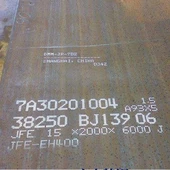
In the maritime industry, steel plates play a pivotal role in ensuring the structural integrity and safety of ships. Among the various grades of steel plates available, BV D420 marine steel plates stand out for their exceptional performance in harsh marine environments. These grades are specifically designed to meet the rigorous standards set by classification societies like Bureau Veritas (BV) for use in shipbuilding.
BV D420 are carbon-manganese steels, with a carefully balanced mix of elements that contribute to their strength and corrosion resistance. The primary alloying elements include carbon, manganese, silicon, phosphorus, sulfur, chromium, nickel, molybdenum, and copper. The precise composition of these elements is tailored to achieve the desired mechanical properties and welding characteristics.
|
BV D420 extra High Strength Chemical Composition Tempering and Quenching |
|||||||
|
Grade |
The Element Max (%) |
||||||
|
C |
Si |
Mn |
P |
S |
Al(min) |
N |
|
|
BV/D420 |
0.20 |
0.55 |
1.70 |
0.030 |
0.030 |
0.015 |
0.020 |
In terms of mechanical properties, these steel plates exhibit high tensile strength, good yield strength, and excellent impact resistance. They are designed to withstand the rigors of oceanic travel, including constant exposure to saltwater, waves, and varying temperatures. These properties ensure that the steel plates can maintain their structural integrity under extreme loads and dynamic conditions.
|
BV D420 extra High strength property in Tempering and Quenching |
||||||
|
Grade |
Mechanical Property |
Charpy V Impact Test |
||||
|
Yield |
Tensile |
Elongation |
Degree |
Energy 1 |
Energy 2 |
|
|
BV/D420 |
Min Mpa |
Mpa |
Min % |
-20 |
J |
J |
|
420 |
530-680 |
18% |
28 |
42 |
||
|
Note: Energy 1 is transverse impact test, Energy 2 is longitudinal |
||||||
Regarding heat treatment, BV D420 steel plates are typically subjected to controlled rolling and normalization processes. Controlled rolling involves precise temperature control during the rolling process to enhance the mechanical properties of the steel. Normalization, on the other hand, involves heating the steel to a temperature above its upper critical point and then cooling it slowly to improve its microstructure and mechanical properties.
In terms of size, these steel plates are available in a wide range of thicknesses, widths, and lengths to meet the diverse needs of the shipbuilding industry. Whether it's for the hull, deck, or other structural components, BV D420 steel plates can be customized to fit specific design requirements.
Impact testing is an essential part of the quality control process for these steel plates. This testing involves subjecting the steel to low-temperature impact loads to assess its toughness and resistance to cracking. BV D420 steel plates are designed to meet strict impact testing standards, ensuring their reliability in extreme conditions.
The primary applications of BV D420 steel plates are in the construction of ships and marine structures. These plates are widely used in the hulls of cargo ships, passenger vessels, and other types of watercraft. Their excellent corrosion resistance and high strength make them ideal for use in saltwater environments, where they are exposed to constant moisture and corrosive elements.