


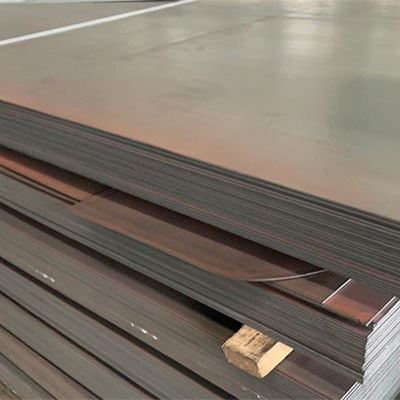


 ASME SA387 Grade 22 Class 1 is a 2.25Cr‑1Mo chromium‑molybdenum alloy steel plate manufactured in strict accordance with ASME SA387/SA387M and ASTM A387/A387M standards. Developed for high‑temperature, high‑pressure and sour corrosion service conditions, this grade delivers stable high‑temperature creep resistance, outstanding hydrogen sulfide corrosion resistance, and excellent weldability and formability.
Unlike the high‑strength Class 2 variant, Gr.22 Cl.1 prioritizes high ductility and good workability, which effectively reduces processing cracking and scrap rates during vessel rolling, bending and forming operations.
ASME SA387 Grade 22 Class 1 is the preferred medium‑to‑high temperature pressure vessel steel for oil & gas, petrochemical, coal chemical and thermal power projects. Widely adopted for hydrogen‑containing equipment and sour‑gas environment projects, it serves as a key structural material for high‑temperature reactors, heat exchangers and pressure surge drums. As a cost‑effective and reliable upgrade alternative to plain carbon pressure‑vessel steels, it achieves a favourable balance between safety performance and project expenditure.
As a professional exporter of pressure‑vessel steel plates with 18‑year industry experience, GNEE Steel maintains solid partnerships with top‑tier domestic steel mills. We supply full‑range stock plates as well as custom rolling services, complying rigorously with ASME production and inspection specifications and providing complete sets of international certification documentation. Our products are regularly exported to global engineering markets including the Middle East, Europe, Southeast Asia and the Americas. With extensive experience in overseas project coordination, material certification and export logistics, we help customers mitigate risks arising from improper material selection and document non‑compliance.

Need Gr.22 Cl.1 steel plates-either in stock or custom-made?
Provide the thickness, width, and quantity, and receive a technical proposal and quotation within 24 hours.
ASME SA387 Grade 22 Class 1 Chrome Moly Pressure Vessel Steel Plate Specification
|
Item |
Detailed Parameters |
|---|---|
|
Product Name |
ASME SA387 Grade 22 Class 1 Chrome Moly Pressure Vessel Steel Plate |
|
Executive Standard |
ASME SA387/SA387M, ASTM A387/A387M |
|
Equivalent Foreign Grades |
EN/DIN: 10CRMO910; BS: 622-515B; UNS: K21590 |
|
Supply Size Range |
Thickness: 6mm-150mm; Width: 1000mm-3900mm; Length: 3000mm-12960mm (customizable) |
|
Delivery State |
Hot Rolled (HR), Normalized (N), Normalized & Tempered (N+T), support SPWHT simulated post-weld heat treatment |
|
Standard Detection Certificate |
EN 10204 3.1 Mill Certificate, EN 10204 3.2 Third-Party Inspection Report |
|
Deep Processing Service |
Custom cutting, edge beveling, sandblasting rust removal, flatting, precise size customization |
|
Export Packaging |
Waterproof and rust-proof film + wooden pallet reinforcement, ocean-going moisture-proof and shock-proof packaging |
ASME SA387 Gr.22 Cl.1 PVQ Plate Chemical Composition
|
Element |
Heat Analysis (%) |
Product Analysis (%) |
|---|---|---|
|
Carbon (C) |
0.05 - 0.15 |
0.04 - 0.15 |
|
Manganese (Mn) |
0.30 - 0.60 |
0.25 - 0.66 |
|
Silicon (Si) |
≤0.50 |
≤0.50 |
|
Phosphorus (P) |
≤0.035 |
≤0.035 |
|
Sulfur (S) |
≤0.035 |
≤0.035 |
|
Chromium (Cr) |
2.00 - 2.50 |
1.88 - 2.62 |
|
Molybdenum (Mo) |
0.90 - 1.10 |
0.85 - 1.15 |
ASME SA387 Gr.22 Cl.1 PVQ Plate Mechanical Property
|
Performance Index |
Standard Value |
|---|---|
|
Tensile Strength |
415 - 585MPa (60 - 85ksi) |
|
Yield Strength (0.2% Offset, Min) |
≥205MPa (30ksi) |
|
Elongation (50mm Gauge Length, Min) |
≥18% |
|
Reduction of Area (Round Specimen, Min) |
≥45% |
|
Reduction of Area (Flat Specimen, Min) |
≥40% |
ASME SA387 Gr.22 Cl.1 Plate Core Advantages
Superior High‑Temperature Stability and Creep Resistance
Featuring a combined alloy system of 2.25% Cr + 1.0% Mo, the steel plate delivers long‑term reliable service at operating temperatures up to 600 °C, offering effective resistance against high‑temperature creep deformation and microstructural degradation. It addresses the insufficient high‑temperature strength of plain carbon steel and reduces unplanned equipment shutdowns and frequent maintenance.
Excellent Sour‑Gas Corrosion and Oxidation Resistance
Chromium forms a dense protective oxide film on the steel surface to resist high‑temperature oxidation. Suitable for service in sour‑gas environments containing H₂S, the material complies with NACE MR0175 test requirements. It significantly retards equipment corrosion and ageing, extending the service life of pressure vessels to more than three times that of conventional carbon steel plates.
Low Embrittlement Tendency and High Structural Safety
Stringent control of phosphorus and sulphur impurities (total P+S ≤ 0.035 %) minimizes temper embrittlement risk. Stable mechanical properties are maintained even after prolonged high‑temperature service and post‑weld heat treatment. The low‑impurity chemistry guarantees consistent material performance throughout the full service life of equipment.
Outstanding Weldability and Formability
The low‑carbon design (0.04%‑0.15 %) effectively prevents welding cold‑crack defects. Compared with the high‑strength Class 2 variant, Class 1 provides a minimum elongation of 18 % and improved ductility. It is well‑suited for complex fabrication processes including vessel rolling, bending and flanging, substantially lowering scrap rates during shop fabrication.
ASME SA387 Gr.22 Cl.1 Chrome Moly Steel Plate Main Applications

- Oil & Gas / Petrochemical Industry: Sour gas storage tanks, hydrogenation separators, high-temperature reaction kettles, shell-and-tube heat exchangers, high-temperature pipeline flanges, oil refining plant heating equipment
- Thermal Power / Nuclear Power Industry: Boiler drums, high-temperature flue ducts, waste heat recovery pressure vessels, high-temperature header structural plates
- Coal Chemical Industry: Coal-to-oil synthesis reactors, hydrogen-containing medium pressure vessels, high-temperature heat exchange equipment
- General High-Pressure Equipment: Industrial high-temperature and high-pressure buffer tanks, chemical reaction vessels, pressure pipeline supporting plates
Why Choose GNEE Steel?
- Inspection & Witnessing: Full cooperation with third-party inspections (SGS, BV, TÜV)
- Processing & Distribution: One-stop service including cutting, bevelling, drilling, shot blasting, and packaging
- Export Documentation: Certificate of Origin (CO), invoice, packing list, and quality certificates (3.1 / 3.2)
- Logistics & Fulfillment: Sea, land, and multimodal transport; support for trade terms such as FOB, CIF, and DDU


Request now: 3.2 Certificate Sample + Stock List + Free Sample.
Send an email to receive these; we will reply within 48 hours. Please include "Gr.22 Cl.1 Inquiry" to ensure priority handling.
FAQ
Are SA387 Gr.22 Class 1 and Class 2 interchangeable?
No, SA387 Grade 22 Class 1 and Class 2 are not directly interchangeable. While they share the exact same chemical composition (2.25% Chromium and 1% Molybdenum), they have different heat treatments, minimum yield strengths, and tensile strength ranges. Substituting one for the other requires engineering evaluation.
Can SA387 Gr.22 be used in sour natural gas environments?
Yes, ASME SA387 Gr. 22 (a 2.25Cr-1Mo chromium-molybdenum alloy steel) can be used in sour natural gas environments, provided it undergoes proper heat treatment, hardness control, and supplementary testing to meet standard sour service requirements like NACE MR0175 / ISO 15156.
What is the maximum service temperature for ASME SA387 Gr.22?
The maximum allowable design or service temperature for ASME SA387 Grade 22 (2.25% Cr – 1% Mo alloy steel) is typically up to 600°C (1,112°F) in general industrial applications, with ASME Boiler and Pressure Vessel Code Section II, Part D allowable stress tables providing stress values up to 1100°F (593°C) for this material classification.
Is preheating required when welding ASME SA387 Gr.22 plates? What is the minimum preheat temperature?
Yes, preheating is strictly required when welding ASME SA-387 Grade 22 (2.25Cr-1Mo alloy) plates. A minimum preheat temperature of 300°F to 400°F (150°C to 200°C) is typically mandated to prevent hydrogen-induced cold cracking and manage the rapid cooling rates of this air-hardening chrome-moly steel.
Are 10CrMo9-10 and SA387 Gr.22 completely equivalent?
No, 10CrMo9-10 and SA387 Gr.22 are not completely equivalent, though they are widely considered functional equivalents. They belong to different regional standards with slight variations in exact chemical limits and mechanical testing rules.
Hot Tags: ASME SA387 Gr.22 Cl.1 Pressure Vessel Steel Plate, China ASME SA387 Gr.22 Cl.1 Pressure Vessel Steel Plate manufacturers, suppliers, factory, C15 Carbon Steel Round Bar, Pressure Vessel Steel, Hot Rolled Boiler Pressure Vessel Plate

