



A537 Class 2 Quenched Steel Plate
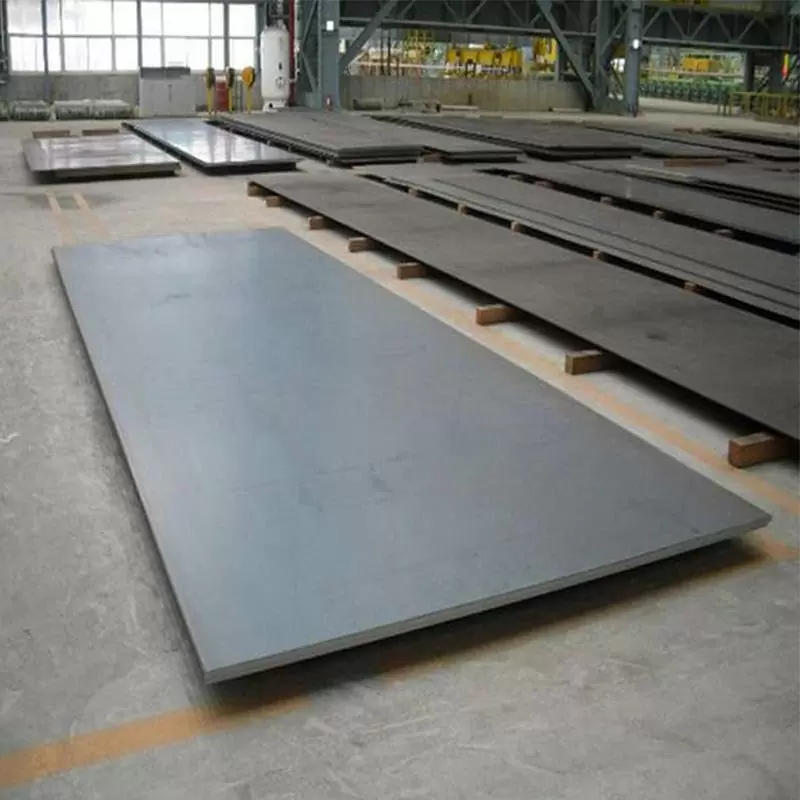
ASTM A537 Class 2 steel is a higher yield and tensile strength material used in the fabrication of pressurised vessels and steel boilers.
The steel includes the alloying of carbon, manganese and silicon and is heat treated using the quenched and tempered method which gives the material its residual strength. Sourced by the world's leading fabricators, ASTM A537 Class 2 is a material used extensively by the oil, gas and petrochemical industry.
Why Choose A537 Class 2?
For critical pressure vessel applications demanding 415 MPa minimum yield strength, -45°C impact resistance, and exceptional weldability – GNEE Steel delivers the quenched & tempered (Q&T) carbon-manganese-silicon steel you can trust
What are the chemical composition and mechanical properties of ASTM A537 Class 2?
Chemical Composition of ASTM A537 Class 2 Carbon Steel Plate
| Grade | C | Si | Mn | P | S | Cr | Mo | Ni | Cu | |
|---|---|---|---|---|---|---|---|---|---|---|
| 40 mm | > 40 mm | |||||||||
| A537 Class 2 | 0.24 | 0.15/0.50 | 0.70/1.35 | 1.00/1.60 | 0.035 | 0.035 | 0.025 | 0.080 | 0.25 | 0.35 |
Mechanical Properties of ASTM A537 Class 2 Carbon Steel Plate
| Grade | Yield (MPa) | Tensile (MPa) | Elongation | Thickness | |
|---|---|---|---|---|---|
| A50mm | A200mm | ||||
| A537 Class 2 | 415 | 550/690 | 22% | - | 65 |
| 380 | 515/655 | 22% | - | > 65 100 | |
| 315 | 485/620 | 22% | - | > 100 150 | |
Dimensional Range
| Dimension | Standard Range | GNEE Custom Capabilities |
|---|---|---|
| Thickness | 6mm-150mm | 6mm-200mm (special orders) |
| Width | 1000mm-4200mm | 800mm-4800mm |
| Length | 5000mm-18000mm | 3000mm-24000mm |
Equivalent Materials for A537 Class 2
Equivalents include ASME SA537 Class 2, EN 10028-3 P460NH, DIN 19Mn6, JIS SPV490.
|
Standard |
Grade/Equivalent |
Key Features |
Applications |
|---|---|---|---|
|
ASTM A537 |
Class 2 |
Q&T, yield 415 MPa |
High-pressure vessels |
|
ASME SA537 |
Class 2 |
Identical |
Boilers |
|
EN 10028-3 |
P460NH |
Similar Q&T properties |
Elevated temp service |
|
JIS G3115 |
SPV490 |
High strength boiler steel |
Pressure boilers |
What are the advantages of A537 Class 2 Quenched Steel Plate?

A537 Class 2 hot-rolled Steel Plate
1. Enhanced Safety: The high tensile strength and impact resistance of A537 Class 2 plates contribute to the overall safety of pressure vessels. These properties help prevent catastrophic failures, ensuring the protection of personnel and equipment.
2. Cost-Effectiveness: Although A537 Class 2 plates may have a higher initial cost than other materials, their durability and longevity result in lower maintenance and replacement costs over time. This cost-effectiveness is a significant advantage for industries that rely on pressure vessels for critical operations.
3. Reliability: The consistent performance of A537 Class 2 plates under various operating conditions ensures the reliability of pressure vessels. This reliability is crucial for maintaining continuous operations and minimizing downtime in industrial processes.
4. Versatility: The versatility of A537 Class 2 plates allows them to be used in various applications, from storage tanks to reactors. This flexibility makes them a preferred choice for many industries.
Heat Treatment Process: The Science Behind the Strength
A537 Class 2 achieves its exceptional properties through a precise two-step thermal process :
- Quenching: Heating to 880-920°C followed by rapid water cooling to transform austenite to martensite
- Tempering: Reheating to ≥595°C to reduce brittleness while retaining high strength
This process creates a fine-grained microstructure that delivers:
- 20% higher yield strength than Class 1
- Improved notch toughness at cryogenic temperatures
- Consistent properties across the entire plate thickness
- Enhanced weldability with minimal preheating requirements
A537 Class 2 vs. Class 1: Critical Differences
| Comparison Factor | A537 Class 2 | A537 Class 1 |
|---|---|---|
| Heat Treatment | Quenched & Tempered | Normalized |
| Yield Strength | 415 MPa min | 345 MPa min |
| Impact Test Temp | -45°C | -20°C |
| Max Thickness | 150mm | 65mm |
| Applications | High-pressure, cryogenic | Moderate pressure, ambient temp |
Applications: Where A537 Class 2 Excels
A537 Class 2 is the material of choice for demanding industries requiring both strength and low-temperature performance:

1. Oil & Gas Industry
Offshore platform pressure vessels
Subsea separation equipment
LNG storage and transport components
Pipeline pig launchers/receivers
2. Chemical & Petrochemical
Cryogenic storage tanks for industrial gases
High-pressure reactors operating at -40°C to 350°C
Heat exchangers for extreme temperature cycling
Ammonia and fertilizer production vessels
3. Power Generation
Nuclear power plant pressure vessels
Coal-fired boiler components
Steam headers and separators
Combined cycle power plant heat recovery systems
4. Heavy Industrial Processing
High-pressure autoclaves for composite manufacturing
Pressure vessels for pulp and paper industry
API 650 and API 620 storage tanks
Industrial furnace pressure chambers

🏭 GNEE Steel's Manufacturing Advantage
At GNEE Steel, we produce A537 Class 2 plates with precision and quality at every step:
1. State-of-the-Art Q&T Process
- Computer-controlled quenching systems for uniform cooling
- Tempering furnaces with ±5°C temperature accuracy
- Real-time monitoring of heat treatment parameters
2. Quality Assurance Protocol
Every plate undergoes:
- Spectrometric chemical analysis (ISO 17025 accredited)
- Tensile, impact (-45°C), and hardness testing
- 100% ultrasonic inspection (per EN 10160)
- Dimensional verification with laser measurement
- Visual and surface quality checks
- EN 10204 3.2 certification (full traceability)
3. Custom Solutions for Your Project
- Cut-to-size with precision plasma cutting
- Beveling for seamless welding preparation
- Shot blasting and painting (custom coatings available)
- Third-party inspection (ABS, DNV, Lloyd's, API)
Get in Touch with GNEE Steel Today
Need A537 Class 2 quenched & tempered steel plates for your pressure vessel project? Our experts are ready to help you select the perfect material and provide competitive pricing.
Email: alloy@gneesteelgroup.com
WhatsApp: +86-15824687445
Claim your free ASME SA-537 technical datasheet and material certificate now!
GNEE Steel – Your Trusted Partner for High-Strength Pressure Vessel Steel Solutions Since 2008
ABOUT US
GNEE's corporate culture emphasizes "achieving customers and making employees happy". We adhere to the values of "embracing changes and taking responsibility in actions; there is no best, only better", encouraging employees to constantly pursue excellence and make continuous progress. The company not only focuses on the technical development of the team, but also cares about the personal growth and happiness of employees, striving to create a healthy and harmonious working environment.
If you want to know about certain products, you can send an email to info@gneeheatex.com.
FAQ
What is A537 Class 2 material?
The steel includes the alloying of carbon, manganese and silicon and is heat treated using the quenched and tempered method which gives the material its residual strength. Sourced by the world's leading fabricators, ASTM A537 Class 2 is a material used extensively by the oil, gas and petrochemical industry.
What is the equivalent of A537 Class 2?
The equivalent of the high-strength ASTM A537 class 2 is SPV36 and 19Mn5.
What is ASTM A537 Class 1 material?
The ASTM A537 specification is the Standard Specification for Pressure Vessel Plates, Heat-Treated, Carbon-Manganese-Silicon Steel used in the applications of fusion welded pressure vessels and structures.
What is the difference between ASTM A516 and A537?
A537 has similar machinability and ductility to ASTM A516, but its strength and hardness are significantly increased by heat treatment. Like A516, A537 can be normalized, but it also can also be quenched and tempered, another type of heat treatment
What is the yield strength of A537?
Yield Strength: Minimum yield strength of 265 MPa (38,000 psi) for class 1 plates; the yield strength increases for higher classes. Tensile Strength: Ranges from 450 MPa (65,000 psi) to 620 MPa (90,000 psi) based on the class of the plate.
What is the difference between SA 537 Class 1 and Class 2?
Overview SA 537 Cl 1 & SA 537 Cl 2
Class 1 is normalized and the tensile is in the 70,000 – 90,000 level. Class 2 is quenched and tempered with a tensile range of 80,000 – 100,000. Minimum yield strength for class 1 is 50,000 and for class 2 is 60,000.
Hot Tags: a537 class 2 quenched steel plate, China a537 class 2 quenched steel plate manufacturers, suppliers, factory, SA302GrD hot rolled boiler steel plate, SA516 Steel Boiler Plate, SA455 Boiler Quality Plates, Pressure Vessel Plate, Astm A516 Gr 70 Plate, Stainless Pressure Vessel


